Good SEO Builds Marketing Pipeline - Not Just Traffic
Early stages SEO rightly prioritises visibility metrics and overcoming technical barriers to Google visibility. Sure enough, that initial SEO work is useful as both a standalone organic search visibility boost and foundation for long-term marketing planning. But if you’re well into month 6 forking out big retainers to an SEO agency that’s still showing you keyword SERP ranking and organic traffic reports but nothing about a marketing pipeline, you aren’t getting bang for your buck.
Content Quantity vs Quality
Content is one of the main SEO deliverables, often in the form of large, structured sets of web pages split between blogs, landing pages and even hybrids of the two. It brings the client’s website traffic from Google searches/keywords relevant to them and that’s how its performance usually winds up being measured.
And so SEO agencies often report hard numbers in clicks, sessions and Google keyword rankings every month. It’s smooth sailing from the agency’s perspective, but how much value is the client really getting out of it?
Beyond Traffic and Conversions to Pipeline
One answer SEOs frequently have for this question is to emphasize conversions (key business outcomes like purchases and lead qualification) in their reporting. And on the surface, it seems like this addresses the question of how much tangible value the client’s getting from the SEO.
But considering the true scope of the audiences that content as a digital marketing tool is capable of reaching, simply conveying how traffic resulted in conversions does not answer the question either.
Reporting On Pipeline Progress
What’s missing is evidence of a marketing pipeline. SEO content does not only bring bottom of the funnel audiences ready to convert to your site, but also potential customers and leads that are in the awareness stage whose various questions, comparisons, confusions and triggers for moving through the funnel are best addressed via tailored content.
Reports showing this is something clients can and should reasonably demand without incurring additional charges seeing as it is entirely doable from within the traditional SEO toolset - namely, internal linking.
Internal Linking Architecture
Internal linking is very important when it comes to SEO. Aside from helping Google’s crawler bots discover and thus index your content faster, it also takes users from one page to another and hence guides them through the funnel.
SEO content strategy usually entails structuring entire sections of a website - a Blog section or even a Knowledge Hub, a Services menu for the landing pages and so on. This means ample scope for creating an internal linking architecture, and SEO reports should address how well it’s performing its purpose.
Google Analytics 4 Exploration Reports
Tools that help highlight the marketing pipeline internal linking builds to guide users through the funnel are part of the established SEO stack. For example, Google Analytics 4’s (GA4) Exploration Reports show how many users moved from one page to another one that the former internally links to.
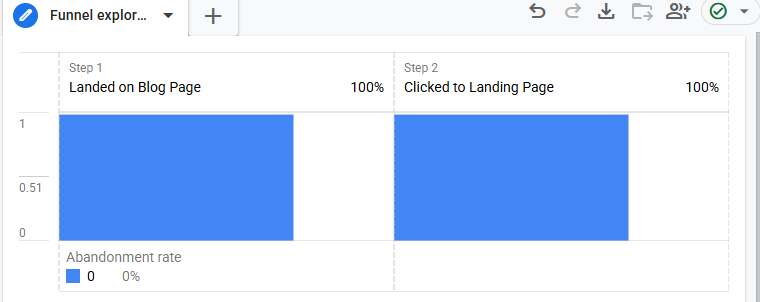
Additionally, GA4 Funnel Reports use the same Page Path and Page Referrer dimensions to visualize how many users made it through the steps of custom-created funnels aligned with how SEOs want users to move through the website.
Leveraging Google Tag Manager
Google Tag Manager (GTM) takes what SEOs can track and report on user behaviour on your website to the next level, and this applies to internal linking architecture & marketing pipeline too.
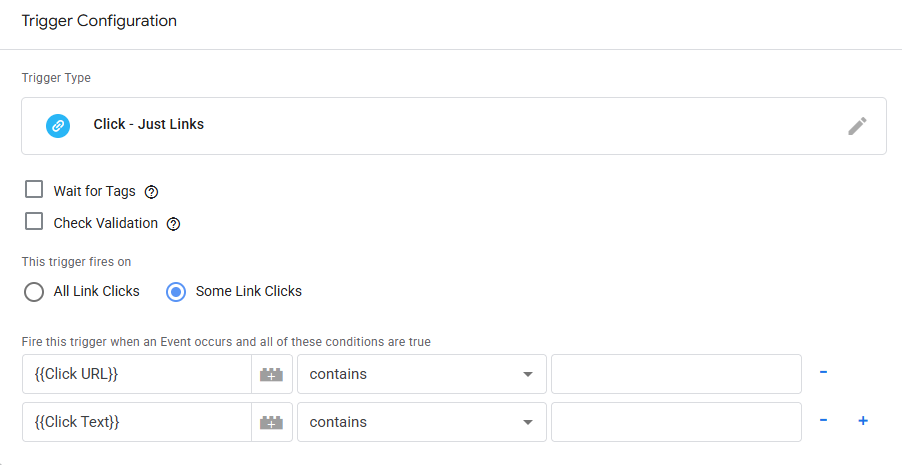
Built-in GTM variables like Click URL, Click Text & Click Classes and properly conditioned triggers let you fire GA4 Event Tags whenever users on specific pages click specific internal links. GA4’s Exploration Reports can then use these Event Tags and their event parameters in Path or Funnel Reports to visualize what your SEO marketing pipeline looks like, and if it’s succeeding in moving users through their buyer/conversion journey.
Long-term, SEO agencies should be able to use these features to show their client how much of the organic search traffic (filtered for in the Exploration Reports) they’re bringing to top of funnel pages is moving through the marketing pipeline toward more bottom-of-funnel content as desired. It just needs proper, explanative naming convention for the Event Tags and the appropriate date range filter on the Exploration Reports.
SEO Marketing Pipeline & Cross Channel Synergy
Aside from showing you that your SEO agency is indeed using its content strategy and internal linking tools to the best of what they can achieve for you, reporting on marketing pipeline the way we’ve discussed also unlocks valuable insights for cross-channel synergies. And cross channel synergies are increasingly necessary in the current digital marketing climate.
For instance, using GA4’s Product Link with Google Search Console (GSC), your SEO agency can identify the specific Google keywords whose traffic proved the best in terms of triggering the Event Tags and hence moving through the funnel. The semantic and thematic patterns then identified from these reports can be used to inform future keyword targeting in Google Ads to ensure your ad spend is bringing you relevant traffic.
The same GTM-GA4 functionality can also be used to document longer, more elaborately plotted user journeys through your website.
Expect More
The era of SEO agencies cruising on simple deliverables with easy reporting is over. Continuing in that same vein is suboptimal for both agency and client - the former misses out on showing the true impact of their services while the latter becomes more likely to end contracts they could’ve gotten more out of.
Planning and building a marketing pipeline to funnel users through the buyer journey is crucial and it is imperative that you as a client expect your SEO providers to report on it once traffic’s been steady for a few months.